Major events, agency work and changes affecting the UAE and Saudi events industry.
Edition
All companies
No matching companies.
All topics
All news
No matching stories.
Choose another topic or clear the filters.
Stories are grouped by publication week, Monday–Sunday. Event dates are shown separately. The earliest week contains only the available records from 19 September onward.
Events
Culture opens new doors, from design laboratories to an interactive park
2026-11-02 – 2026-11-08
Cultural programmes offer several ways to take part, while new exhibitions in Doha and Abu Dhabi put making and participation at the centre of the work.
Cultural programmesDesign exhibitionsCraft collaborationInteractive installationsUAEQatar
Cultural events can offer more than a finished object to look at. This week’s selected reports connect installations, discussion and after-dark visits with two different approaches to participation: craftswomen helping shape contemporary design, and park visitors changing the experience of an artwork themselves.
More than one reason to visit
Editorial illustration
A design district, an electronic-arts symposium and a museum after dark are offering three different answers to the same question: what else can a cultural programme ask its audience to do?
Dubai Design Week, running at d3 from 3–8 November, spreads the answer across formats. Installations and exhibitions sit alongside Downtown Design’s trade fair, workshops and a weekend marketplace. A visitor can encounter the work, meet the people selling it or try making something. Those are different invitations, even when they share an address.
ISEA2026 separates its encounters in another way. Its online special tracks and workshops run from 6–9 November, followed by core academic sessions from 10–14 November, while artworks, installations and performances extend the physical programme across Dubai. The research discussion and the public experience are connected without requiring everyone to attend the same session.
Cairo’s Grand Egyptian Museum offers a sharper change of rhythm. Eternal Sun, introduced on 1 November, is a 35-minute projection experience in the Grand Hall after daytime visiting. It gives the building a second kind of programme: a timed show rather than another gallery visit.
These announcements do not prove that audiences stay longer or spend more. They do reveal a useful programming pattern: organisers are giving people several ways into the same cultural subject. The interesting creative work lies in making those experiences distinct enough to justify the next visit.
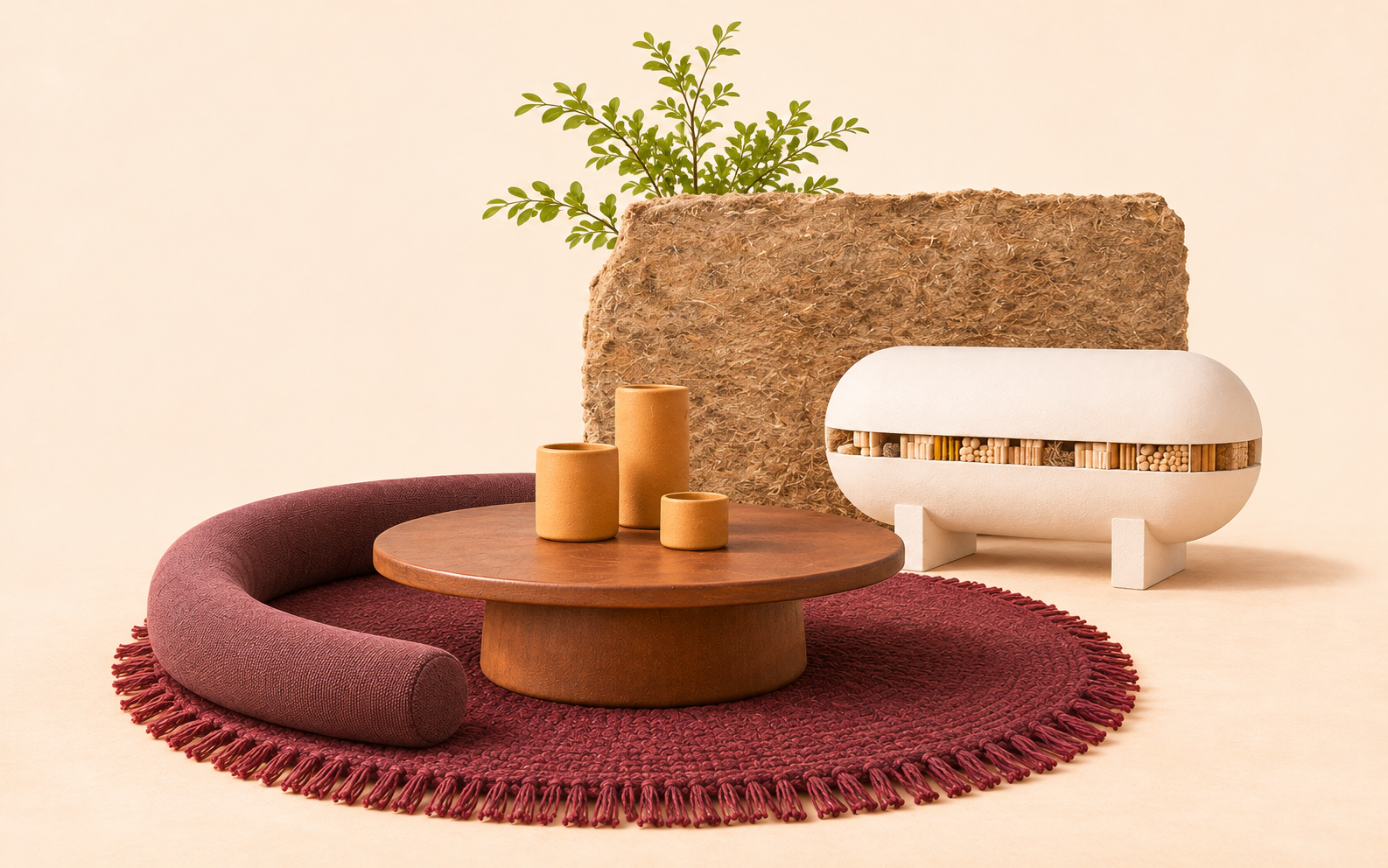
Irthi’s Design Labs II and Abu Dhabi’s Children’s Biennale put participation in different places. In Doha, craftswomen contribute to the design process before the work reaches an exhibition. In Abu Dhabi, the visitor can become part of what happens to the artwork.
Irthi’s Design Labs II presents five collections at Fereej Al Asmakh, developed by craftswomen, designers and material specialists. Traditional techniques shape furniture, installations and architectural works. The 5–7 November programme includes discussions and workshops; the display continues until 31 January 2027.
The Children’s Biennale, inaugurated at Umm Al Emarat Park on 5 November, gives participation a more immediate role. Its eight installations explore touch, sound, movement and light. Children can braid and reconnect ropes in Common thread, Common ground, while listening devices in Telephone alter how visitors hear the park. Family activities, workshops and school tours accompany the installations through 6 December. The programme is presented as part of Abu Dhabi Festival with National Gallery Singapore and the park among its partners.
The connection is how an exhibition makes room for someone else’s contribution. Irthi’s collaborators help determine what gets made; the Biennale’s visitors can change or activate the encounter. Those are different kinds of involvement, with different production needs. Both make the physical experience more specific than a general invitation to look at art, without establishing longer-term learning or audience outcomes.
Selected reporting for 2–8 November 2026 · Asia/Riyadh. Source collection checkpoint: 2026-11-09 13:42 Riyadh. Public-source coverage remains partial.
Marketing
Campaigns invite action. New media networks seek a place in everyday visits.
2026-11-02 – 2026-11-08
Campaigns turn attention into an action, while new UAE media offers bring advertising closer to padel players and restaurant guests.
UAE marketingBrand activationExperiential marketingOut-of-home advertisingRestaurant media
A call to a friend, a sign to learn and a calculator to try give three campaigns a practical next step. Two newer media launches approach participation from another direction, building their offers around places people already spend time. The distinction between a working service, available advertising space and a future plan matters in both.
The campaign is an invitation to do something
Editorial illustration
Pick up the phone. Learn a sign. Work out the bill. Three campaigns covered this week make their ideas tangible through a small action the audience can take.
Facto Middle East’s self-funded Hey Man uses filmed calls and social storytelling to encourage men to check in with a father, brother or friend—and stay with the conversation beyond “fine”. The creative device is familiar enough to repeat. Its invitation does not require a special venue or a new piece of technology.
Shamal and IMPACT BBDO’s Deeply Able makes the action more specific. An underwater setting draws attention to Emirati Sign Language, while practical signs and the Sign It Forward invitation provide a way to participate. The case study published this week examines a campaign launched earlier, on 1 October; it is not a new November launch. The striking setting earns attention, but the language learning gives that attention a purpose.
Paws & Co turns a different abstraction into something physical. Its 12-metre pet bill at Dubai’s Woofstock dramatised a potential lifetime cost of delayed care, then directed owners towards a calculator. The receipt described a scenario, not one family’s actual veterinary bill. That distinction matters as much as the scale of the installation.
The campaigns have different motives: conversation, inclusion and customer acquisition. Their shared creative move is to put a next step inside the idea. That makes the work easier to describe—and potentially easier to join. It does not, on its own, establish lasting behaviour change. The stronger question is what people can actually do once the film, billboard or photograph has caught their eye.
New media networks bring advertising to courts and restaurant tables
Editorial illustration
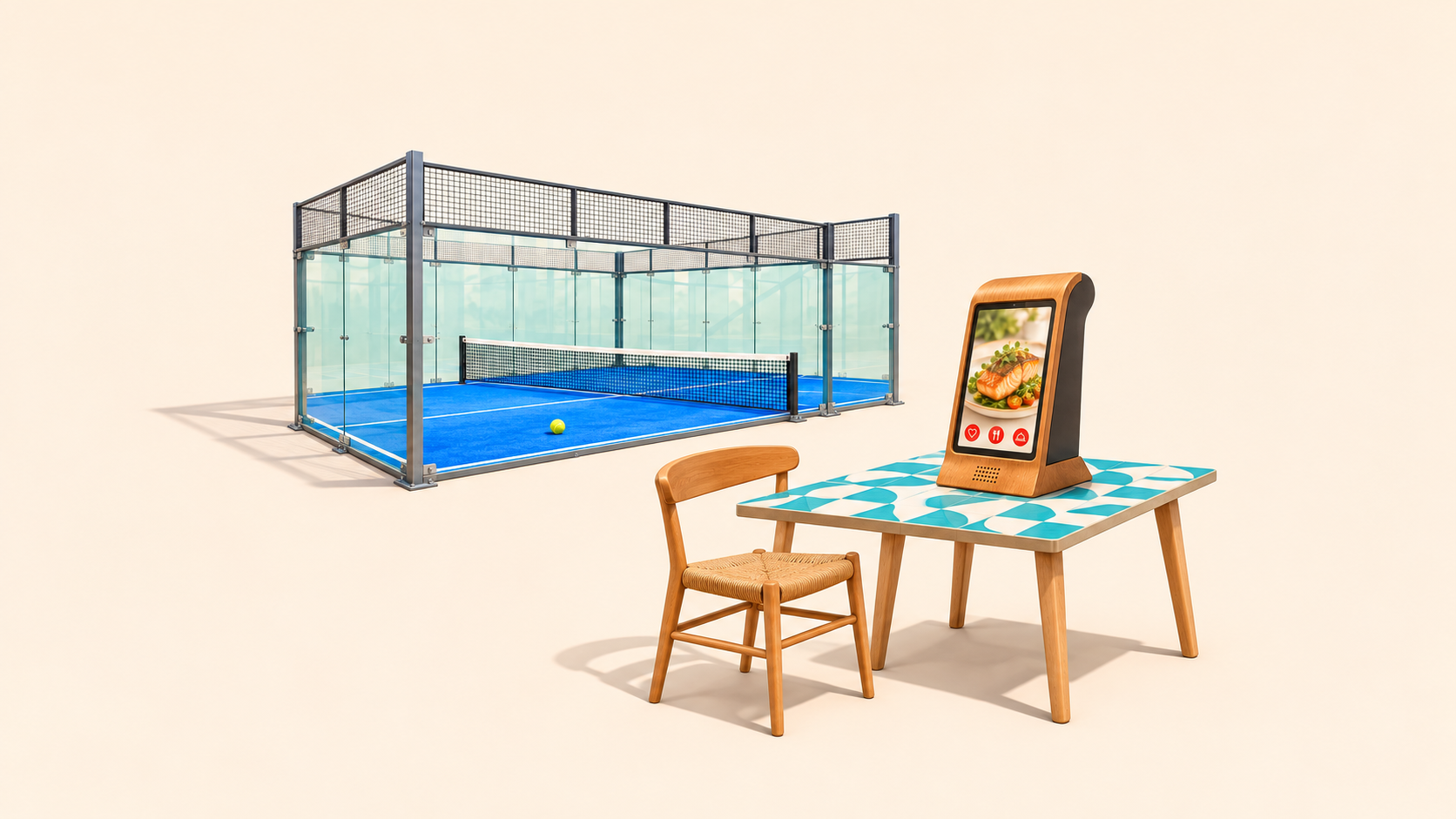
A padel court and a restaurant table give advertisers very different surroundings. Two new UAE networks are building offers around those everyday visits, with the practical details of installation and service as important as the location.
Courtside Media Network sells placements on court glass, fences and net tape. The Dubai company says it handles production, installation, upkeep and removal, with venue tiers and category exclusivity available to buyers. Its founders describe discussions covering nearly 200 courts. That figure is a partnership pipeline, rather than an inventory of installed advertising campaigns.
AYC Network starts with a service tool on the dining table. Its AYC Frames give guests access to menus, orders, service calls, Wi-Fi and reviews. Payments and advertising within those interactions are planned additions. The company’s reported 130 tables combine live and signed Dubai locations; its aim of around 600 active tables by mid-2027 is a target.
Both propositions depend on fitting into an activity people have already chosen. Courtside offers a visible place within a sports venue; AYC puts a screen into the restaurant’s service routine. For a media buyer, that makes the immediate question concrete: which locations and functions are live, what exactly can be booked, and what will demonstrate delivery? The launches explain where the networks want to operate. Their prospective reach should remain separate from the audiences or results an actual campaign delivers.
Selected reporting for 2–8 November 2026 · Asia/Riyadh. Source collection checkpoint: 2026-11-09 13:42 Riyadh. Public-source coverage remains partial.
Company coverage
Public websites and available social posts are checked across the events and marketing watchlists. Coverage can be partial where feeds require login or cannot be retrieved. “No dated match” does not mean no activity.
Coverage at a glance
Counts represent stories in this edition, not the size of the events industry.
Source library
Research notes
Photos and promotional imagery belong to their respective owners. Historical images and editorial covers are labelled. Announced scale is not an audited outcome. Company attribution is included only where the linked source identifies the role.
A clearer view of events and marketing.
The latest developments across two industries that shape how brands meet their audiences.
Entourage Intelligence focuses on UAE and Saudi events and marketing, with selected important news from the wider MENA region and globally. Updated daily, it follows the latest seven days across Events and Marketing, with original reporting summaries, source attribution and the evidence behind every story. Historical weekly briefings remain available.
We check organisers, agencies, brands, venues, industry publications and accessible public social feeds for recent work and market changes.
Check what happened
We verify publication dates, distinguish delivered work from future plans, and credit companies only where their roles are supported.
Explain the story
We bring reports about the same development together, explain what changed and why it matters, and link the original sources.
Keep the sources close.
Every story links to its reporting and company updates. News photographs come from those sources. The weekly digest uses labelled editorial illustrations built from elements in the source images.
A useful view, with clear limits.
We publish what we can date and verify. Some social feeds are not fully accessible, so an absent company or project does not mean there is no recent work.
What we monitor
We prioritise event and marketing agencies, organisers, venues and industry bodies in the UAE and Saudi Arabia, alongside important developments across MENA and globally. We review official websites, public social posts and industry reporting for recent projects, campaign launches, agency wins, partnerships and major event announcements. The MENA filter includes UAE, Saudi Arabia and the wider Middle East and North Africa.