Marketing
Campaigns invite action. New media networks seek a place in everyday visits.
Campaigns turn attention into an action, while new UAE media offers bring advertising closer to padel players and restaurant guests.
A call to a friend, a sign to learn and a calculator to try give three campaigns a practical next step. Two newer media launches approach participation from another direction, building their offers around places people already spend time. The distinction between a working service, available advertising space and a future plan matters in both.
The campaign is an invitation to do something

Pick up the phone. Learn a sign. Work out the bill. Three campaigns covered this week make their ideas tangible through a small action the audience can take.
Facto Middle East’s self-funded Hey Man uses filmed calls and social storytelling to encourage men to check in with a father, brother or friend—and stay with the conversation beyond “fine”. The creative device is familiar enough to repeat. Its invitation does not require a special venue or a new piece of technology.
Shamal and IMPACT BBDO’s Deeply Able makes the action more specific. An underwater setting draws attention to Emirati Sign Language, while practical signs and the Sign It Forward invitation provide a way to participate. The case study published this week examines a campaign launched earlier, on 1 October; it is not a new November launch. The striking setting earns attention, but the language learning gives that attention a purpose.
Paws & Co turns a different abstraction into something physical. Its 12-metre pet bill at Dubai’s Woofstock dramatised a potential lifetime cost of delayed care, then directed owners towards a calculator. The receipt described a scenario, not one family’s actual veterinary bill. That distinction matters as much as the scale of the installation.
The campaigns have different motives: conversation, inclusion and customer acquisition. Their shared creative move is to put a next step inside the idea. That makes the work easier to describe—and potentially easier to join. It does not, on its own, establish lasting behaviour change. The stronger question is what people can actually do once the film, billboard or photograph has caught their eye.
New media networks bring advertising to courts and restaurant tables
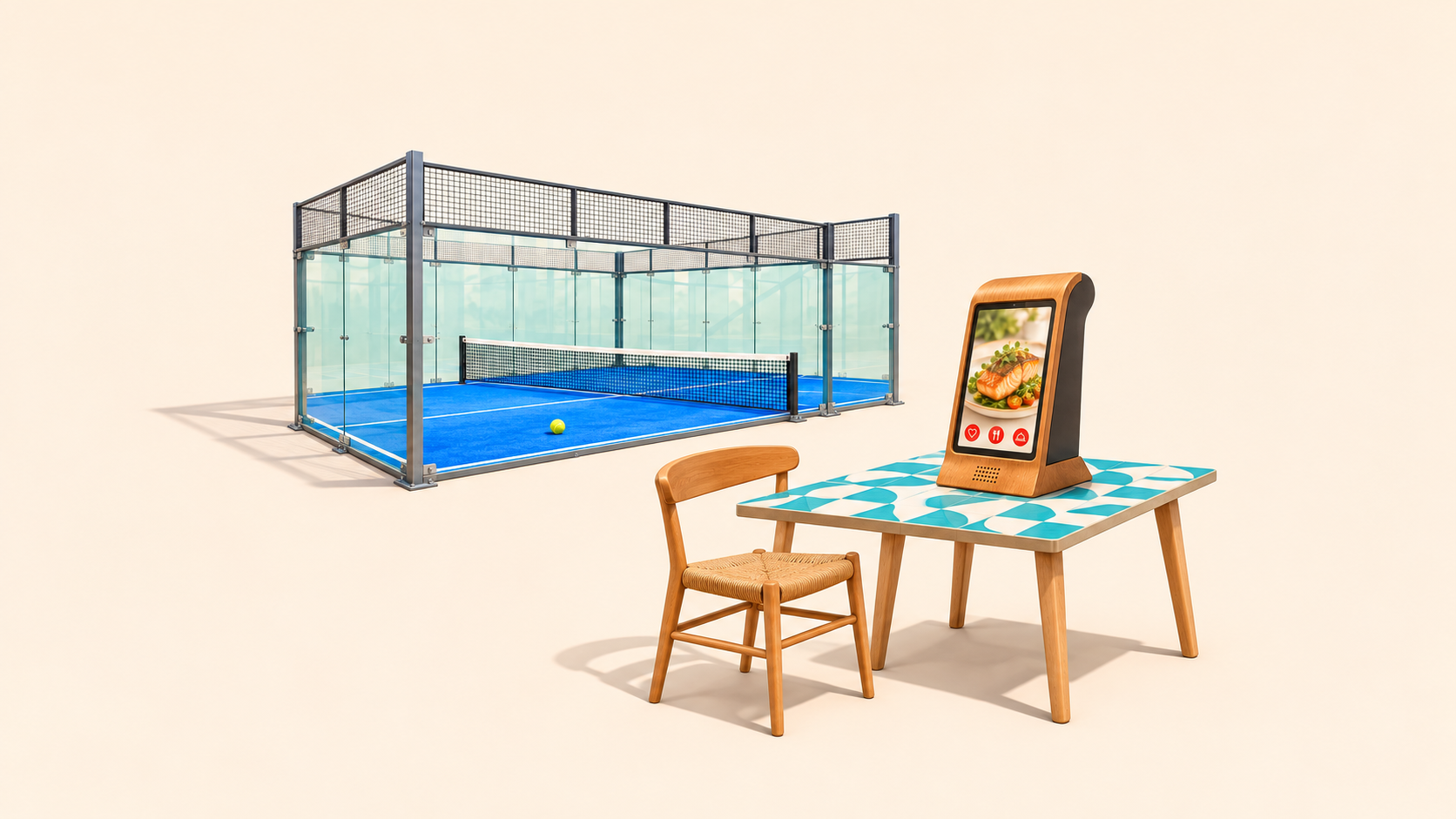
A padel court and a restaurant table give advertisers very different surroundings. Two new UAE networks are building offers around those everyday visits, with the practical details of installation and service as important as the location.
Courtside Media Network sells placements on court glass, fences and net tape. The Dubai company says it handles production, installation, upkeep and removal, with venue tiers and category exclusivity available to buyers. Its founders describe discussions covering nearly 200 courts. That figure is a partnership pipeline, rather than an inventory of installed advertising campaigns.
AYC Network starts with a service tool on the dining table. Its AYC Frames give guests access to menus, orders, service calls, Wi-Fi and reviews. Payments and advertising within those interactions are planned additions. The company’s reported 130 tables combine live and signed Dubai locations; its aim of around 600 active tables by mid-2027 is a target.
Both propositions depend on fitting into an activity people have already chosen. Courtside offers a visible place within a sports venue; AYC puts a screen into the restaurant’s service routine. For a media buyer, that makes the immediate question concrete: which locations and functions are live, what exactly can be booked, and what will demonstrate delivery? The launches explain where the networks want to operate. Their prospective reach should remain separate from the audiences or results an actual campaign delivers.
Selected reporting for 4–10 November 2026 · Asia/Riyadh. Public-source coverage remains partial. News sourced on 11 November belongs to today’s feed, not this completed-day period.